
Power County Tax Record Fields
Assessment attributes sit on the county parcel map. Billed and paid amounts sit with the Treasurer. Link the two by parcel number and tax-code area, and remember the map is not an account ledger.
| Field | What It Shows | Where |
|---|---|---|
| Market value | January 1 estimate reflected in MRKVALUE | Assessor |
| Assessed value | Assessment field shown as ASSESSED_A | Assessor |
| Exempt and taxable values | HOMEOVALUE and TAXVALUE | Assessor |
| Bill and payment status | Charges, receipts, balance and delinquency | Treasurer |
| Tax-code area | District combination recorded in CODEAREA | Assessor and Treasurer |
Idaho assesses property at 100 percent of market value first. Exemptions come off after that. Even so, a tax bill is not a sale-price estimate, because district budgets, taxable value, and exemption status shape the bill, while an open-market sale rests on different evidence.
Power County Value Components
The map separates several value components. Land, farm, residential, commercial, and manufactured-home categories each appear on their own lines. So read them with the Assessor's definitions rather than adding them up. Check the assessment year too. The annual notice shows market value, prior-year values, two earlier tax bills, and taxing-district information. But it is not the Treasurer's current bill. The Idaho State Tax Commission property-tax resources supply the statewide assessment framework. It is used with county records.
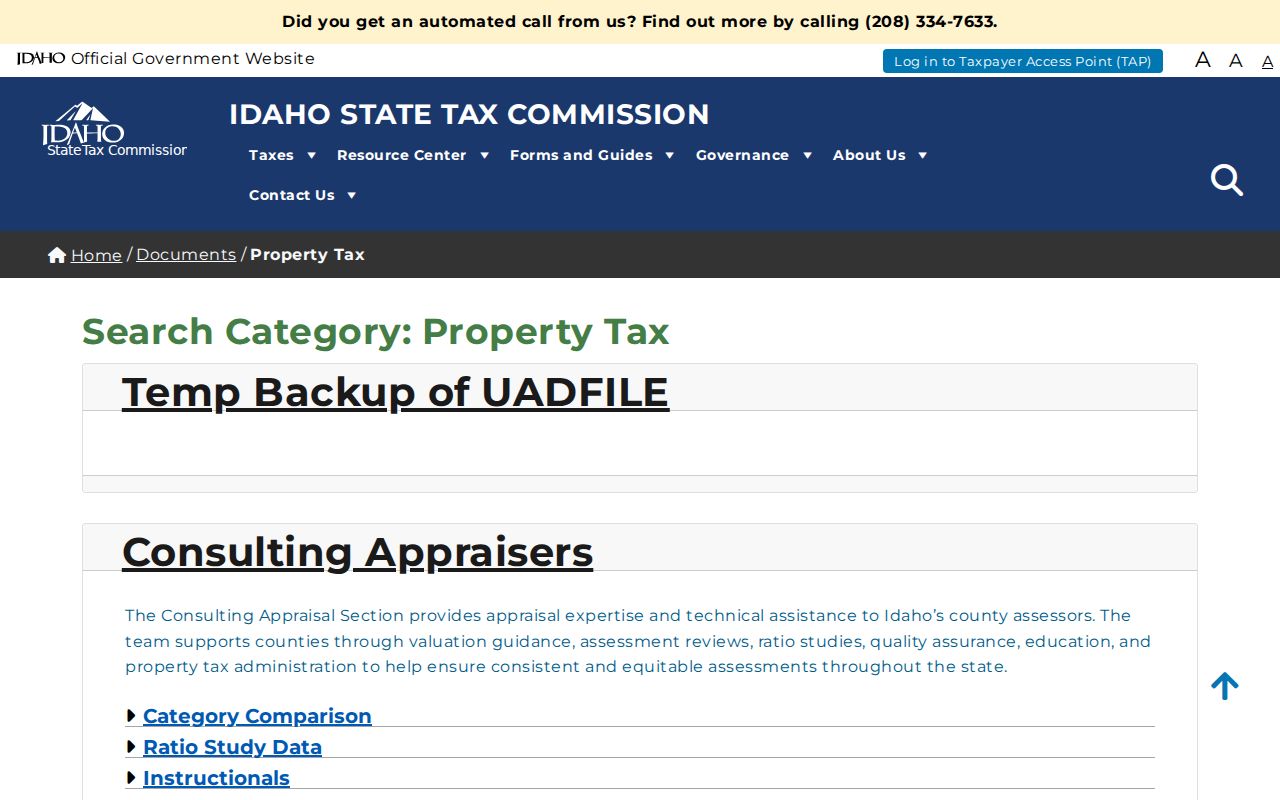
State guidance defines the terms. Parcel values and exemption status still need the Power County Assessor, checked for the correct year.
Request a Power County Tax Bill
No public county tax-bill history form was located. The official Online Payments page offers a payment route, but access to a vendor payment screen is not the same as a complete public ledger. Contact the Power County Treasurer/Tax Collector at 208-226-7614 for the live account.
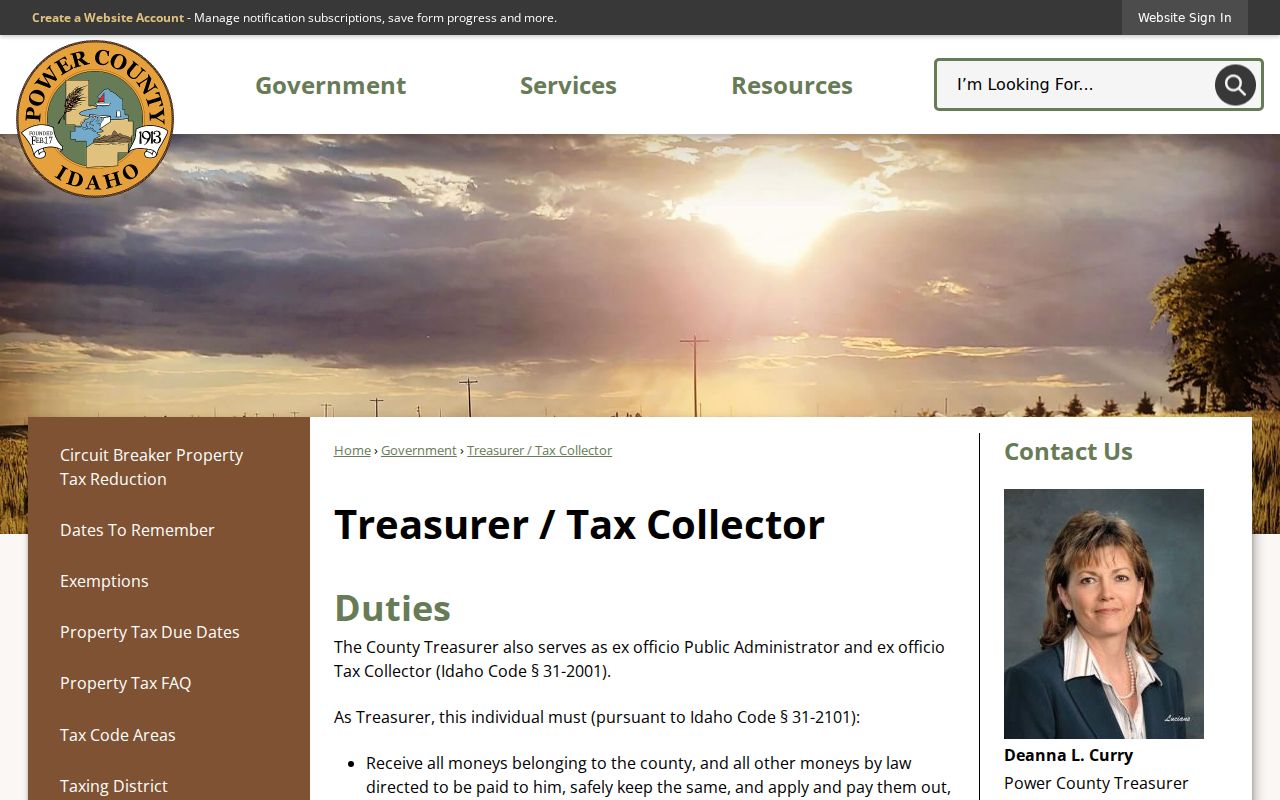
The Treasurer page is the official doorway. Bill, payment, special-assessment, and delinquency questions that the parcel map cannot answer start there.
- Search the parcel map by address and copy the parcel number, owner, legal description, and tax-code area.
- Ask the Treasurer for the current bill, balance, receipts, payment history, special assessments, and delinquency status.
- Compare the Assessor's exemption and taxable-value fields for the same year.
- Confirm any lien, redemption, or tax-deed event with the Treasurer and Recorder.
- Assessed value
- The Assessor's value for tax administration.
- Levy
- A taxing district's rate applied within the tax-code area.
- Homeowner exemption
- Qualifying owner-occupied primary-residence relief.
- Tax lien
- A statutory claim tied to unpaid property tax.
Power County Payment Dates
December 20 is the deadline for full payment or the first half, and June 20 brings the second half due. Subsequent and missed-roll bills are due 30 days from the bill date. A missed notice does not excuse delinquency. Past a deadline, the county applies a one-time 2 percent penalty plus 1 percent monthly interest. Partial payments are accepted. The balance must still meet the deadline, though. Cards, eCheck, and the drop box all work. Online transactions carry a convenience fee, so verify current options before submitting funds.
Power County Exemption Rules
The homeowner exemption covers 50 percent of the home and up to one acre, capped at $125,000 for the stated period, when the property is an owner-occupied primary residence. One older county FAQ still says $100,000. Use the current Tax Commission and Assessor figures instead. Never blend the two. Applications for the homeowner exemption and the circuit breaker open January 1 on the county calendar. April 15 closes current-year property-tax reduction or exemption applications and business personal-property declarations. December 31 closes the current-year homeowner exemption. A 2026 memo on HB 843 changed proration. Date-stamp any advice, and confirm how Power County implements it.
Power County Tax-Code Areas
The CODEAREA field on the parcel map points to a mix of taxing districts. It is not one county-wide rate. The State Tax Commission's Power County summary lists the players: county, school, city, highway, cemetery, library, hospital, ambulance, mosquito-abatement, and others. Match the code area to the bill and the district table. Use the same tax year for both. A city annexation or boundary change can show up in one system before another, and the map's taxing-district overlays help flag the right follow-up question.
Power County Tax-Deed Evidence
A published 2023 notice for 2019 delinquent taxes shows what a tax-deed record can hold: parcel number, owner and last-known address, legal description, delinquent amount, interest, penalty, publication costs, redemption deadline, and hearing date. That crosswalk helps with research. It does not establish the parcel's status today, so verify each angle on its own. The Treasurer tracks the balance and redemption. The Recorder holds any tax deed or later conveyance filed on the parcel. Search iCourt for connected proceedings. A delinquent account, a notice, a hearing, and a final transfer are not the same event.
Appeal a Power County Assessment
Start with the Assessor. Ask to review the property card, valuation basis, comparable sales, exemption status, tax-code area, and prior values. A higher bill alone proves nothing about market value. District budgets and rates can change without the value moving. Filing goes to the Board of Equalization by the fourth Monday in June. The Board hears appeals through the second Monday in July. For 2026, the county set Monday, June 22 at 5:00 p.m. as the assessed-value appeal deadline. So always use the notice for the current year.
Appeal window. Power County assessment appeals are due to the Board of Equalization by the fourth Monday in June. Confirm the exact date and time on that year's notice.
Reconcile Power County Tax Sources
Power County property tax records divide between the Assessor and Treasurer. The Assessor fixes market value as of January 1, maintains parcel characteristics, applies or records exemption information, sends the June assessment notice, and supports the Board of Equalization process. The Treasurer creates and collects the tax account, records payments, handles balances and special assessments, and answers delinquency or tax-deed questions. One office's screen should not be used as a substitute for the other's record.
Begin with the ArcGIS parcel app when the parcel number is unknown. Search PROPAD1, Parcel_Num, or OWNER1, then copy the parcel identifier, tax-code area, legal description, and value fields. Partial matching and the six-result limit can hide a broad name or street list. Ask the Assessor at 208-226-7616 to confirm the parcel and year when an exact match is not clear.
Next request the live tax account from the Treasurer at 208-226-7614. State the parcel number, owner or entity as shown, situs, tax year, and whether the request concerns the original bill, payment receipt, balance, special assessment, delinquency, or tax-deed status. No public parcel-level bill-history query was located. The online vendor is useful for payment, but its presence does not prove that a complete ledger can be searched without contacting the office.
Keep the assessment notice with the tax bill. The notice can show market value, prior values, two prior tax bills, and taxing-district information. That history can help spot a change, though the Treasurer remains the account custodian. Failure to receive a tax notice does not remove the deadlines described by the county.
Read Power County Tax Changes
A tax-code area bundles several taxing bodies. Power County's district summary covers county, city, school, highway, cemetery, library, and hospital entities. It also lists ambulance, mosquito-abatement, and other districts. Match CODEAREA to the district table and bill for the same year. A boundary or annexation change can move through map and district systems first. Bill systems can catch up on a different schedule. A city mailing address alone cannot pick the right tax area.
Idaho ratio studies compare assessed value with sale price at a class and area level. The studies test level and uniformity. They do not convert a parcel's assessed value into a private appraisal. Public parcel history for Power County carries no sale consideration. When a transaction price matters, get a recorded deed or Assessor sales material.
Exemption guidance must stay tied to the tax year. Current county and state material describes the homeowner exemption as fifty percent of the home and up to one acre. The exemption is capped at $125,000 for the stated period. An older county FAQ passage says $100,000. A 2026 Tax Commission memo on HB 843 changes proration treatment. Keep the discrepancy. Cite the current source date. Ask the Assessor how the rule applies to the account.
Hardship relief, casualty loss, deferral, extension, and property-tax reduction each carry their own conditions. Their forms differ too. An exemption can move taxable value without moving market value. A payment arrangement can change how a balance is handled without changing the assessment. Keep every action tied to its named record.
Document a Power County Appeal
An appeal should target the assessment record, not just the tax due. Ask for the parcel card, value components, assessment date, comparable-sale support, exemptions, and prior values. Check the legal description and physical attributes for errors. District budgets and levies can raise a bill even when assessed value holds steady.
The published route runs through the Assessor. Then it goes to the Board of Equalization by the fourth Monday in June. The board hears appeals through the second Monday in July. For 2026, the county listed June 22 at 5:00 p.m.; later years need the notice and current county calendar. Save the filing, exhibits, hearing notice, decision, and any next-level appeal record.
A 2023 tax-deed notice remains useful only as an example of fields and process. It cannot establish a current delinquency. Verify redemption and balance with the Treasurer. Check any tax deed or later transfer with the Recorder. Check related public proceedings through iCourt and the clerk.