
Trace Power County Previous Owners
A list of past owners comes from recorded transfers. The map on file today cannot supply it. Start with the current deed, pull the grantor's name, then find the deed where that same person bought the land. Repeat the step, matching legal descriptions at every link. Power County publishes no grantor-grantee index online, so the chain runs through the Recorder's counter, mail, and written requests.
| Source | Years It Covers | Where Held | What It Shows |
|---|---|---|---|
| Recorder index and deeds | Exact online cutoff not published | Power County Clerk/Recorder | Grantor, grantee, recording data, legal description |
| Microfilm and deed books | County series; inventory not posted | Recorder and possible archives | Earlier conveyances and references |
| FamilySearch catalog lead | Reported 1897 to 1951 | Catalog and Recorder | A research lead, not verified online coverage |
| Plats and surveys | Current and historic years not indexed online | Recorder | Lot, block, replat, and boundary context |
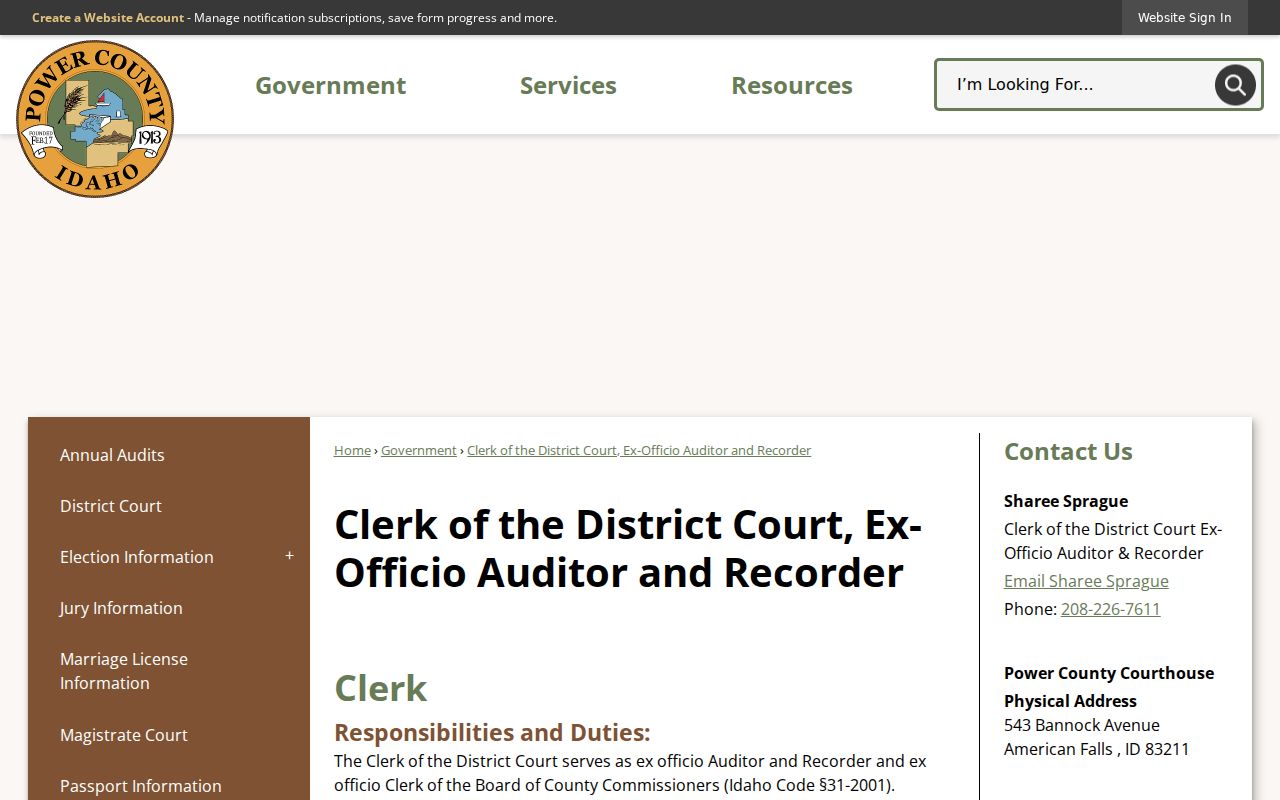
The Power County Recorder page documents the offline custodian route.
Backward deed work rests on county indexes and official records, not a public web history. Turn to the Recorder first for the authoritative chain. The Idaho State Archives, local historical collections, newspapers, and FamilySearch can surface older names and dates. Still, every lead must end at a recorded instrument. A year range listed in a catalog does not mean the images are open online.
Reconstruct Power County Deed Chains
Build a deed-chain table as you go. For each transfer, note the date, grantor to grantee, deed type, instrument or book and page, and the legal description word for word. The chain holds only as long as each land description matches the one before it.
| Transfer Date | Grantor to Grantee | Deed Type | Book/Page or Instrument |
|---|---|---|---|
| Newest confirmed | Prior owner to present grantee | As recorded | Copy CUR_DEED lead, then verify |
| Prior transfer | Earlier grantor to prior owner | As recorded | Follow the deed reference |
| Earlier era | Repeat by exact name variants | Watch for estate or corrective instruments | Continue in deed books or microfilm |
- Find the current deed using parcel, legal description, owner, and CUR_DEED when shown.
- Read the grantor, then search that party as a grantee in an earlier date range.
- Compare every legal description and note splits, combinations, exceptions, and replats.
- Continue through the office index, deed books, or microfilm when web access ends.
- Grantor and grantee
- The party conveying an interest and the party receiving it.
- Chain of title
- The ordered sequence of instruments affecting ownership.
- Reverse index
- An index arranged to help search parties in the opposite role or direction.
- Quitclaim deed
- A conveyance of whatever interest the grantor may hold, without the same promises as a warranty deed.
Request Power County Index Work
The county publishes no public deed-search interface. The Power County Records Request page is the dependable route. Give the parcel, the full legal description, current and former names, and the date range. Ask for grantor-grantee index entries plus the cited instruments. Say whether you want examination or copies, and request an estimate first.
The Recorder's fee schedule lists recorded copies at one dollar per page. It also lists several search and certification charges. Fees can change. Confirm the current quote before ordering a long chain. The office sits at 543 Bannock Avenue, American Falls, and lists 208-226-7611.
Resolve Power County Chain Breaks
Past owners rarely fall into a tidy run of ordinary sales. Probate deeds, trustee deeds, quitclaims, corrections, re-recordings, and boundary adjustments can all break a surname search. Entity name changes can too. A recorded order or personal representative may appear. Search the related probate or civil case in Idaho iCourt when one does.
A release or reconveyance is not an ownership transfer. Match it to the secured instrument it addresses. A tax-deed notice is likewise just a procedural event. The Treasurer and Recorder must confirm redemption and any later deed.
Note: Try alternate spellings, initials, trust names, and entity forms. But accept a match only when the legal description supports it.
Follow Power County Parcel Changes
Parcel numbers change. A split, combination, or replat can assign a new one to the same ground. Save every historical number. Then compare acreage, lot and block, township and range, exceptions, and easements. Assessor descriptions are often shortened, so request the verbatim deed language. Plats and surveys can explain how one old tract became several current parcels. They do not name every prior owner, though. Use them to hold the land steady while names and identifiers shift.
Bridge Old American Falls Titles
American Falls moved during the 1925 and 1926 dam project. Old townsite lots and relocated homes can show up in newspapers and deeds. References to submerged land appear there too, often with no modern street to match. Hundreds of residents and dozens of businesses relocated. Place history matters to a backward chain here. Context from Power County history and the Historical Society helps. But the plat and deed settle the result. The digitized American Falls Press run from 1907 through 1937 can surface legal notices. Treat publication only as a lead toward the official instrument.
Trace Power County Estate Transfers
A former owner can exit the chain through a personal representative deed, beneficiary deed, court order, affidavit, or distribution instrument. Search Idaho iCourt by decedent, estate, and representative. Then request any public, unsealed document needed to understand the parcel transfer. A death certificate does not pass title. Idaho vital records also carry eligibility and confidentiality rules. Keep the trail anchored to the court order and the recorded land instrument, not an obituary or a family story.
Measure Power County Record Depth
The county publishes no earliest online deed year and no year-by-year vault inventory. Secondary finding aids point to a possible Power County deed-record range of 1897 through 1951 in FamilySearch, though the exact catalog item and image access rules remain unconfirmed by official sources. Treat that range as a lead, not proof that every deed in those years is viewable online.
Coverage is unconfirmed. Ask the Recorder which index, deed-book, and microfilm years exist before stating how far Power County previous owners can be traced.
Older Power County records may also live at the Idaho State Archives. Ask for a named series with a date range. Do not assume every county deed was transferred there. Tracing prior owners supports house history, estate work, and property diligence. It must never be used to track or harass a living person.
For each previous owner, keep the instrument citation and the exact land description. A name found in a tax roll, obituary, newspaper, or genealogy index can point the way. But only a deed proves title moved. Some Power County chains also need federal land records or an original patent. It depends on the parcel and the question at hand.
Stop when a gap appears. If a grantor never shows up as an earlier grantee, resolve it before going further. Search spouse names, former entity names, corrective deeds, probate orders, and alternate indexes. Never bridge the gap on a matching surname or a nearby address alone.
Mortgages, releases, liens, lis pendens, easements, and covenants often sit beside the ownership chain. They do not convey anything. A lender or lien claimant does not belong in a previous-owner list. Match each release to its original instrument. Connect any court case to the parcel it touched.
Historic tax rolls can support a year-by-year assessment lead. Power County has not published a complete online run, though. Ask the Assessor, Treasurer, Recorder, or Archives which years survive. Reconcile each roll name against the deed chain. Do not treat it as a transfer date.
Keep a research log. Record every name variant, date span, book or instrument citation, and repository checked. That habit prevents searching the same gap twice. It also lets another reader reproduce the Power County chain of title. Mark catalog years and newspaper clues as unverified until an official deed or index entry confirms them.
Prior owners near Rockland may also require an annexation check. An Area of City Impact record or annexation ordinance changes jurisdiction, not necessarily ownership. Use the recorded parcel and legal description. Follow the same land through the deed index. In American Falls, keep old and relocated townsite references in separate columns until the plat proves how they relate.